
23andMe Had 15 Million Customers' DNA. Here's What Went Wrong.
What the collapse of a $6B company tells us about building on data you can't monetize
Hey — Tom here.
Some startups feel inevitable while they’re happening. The product works, the growth looks real, and the story makes intuitive sense to everyone watching from the outside. Investors see a huge market, the media amplifies the narrative, and the company begins to feel less like an experiment and more like a foregone conclusion.
23andMe once felt like that kind of company. Millions of people willingly mailed their DNA to a lab, helping the company build one of the largest consumer genetic databases in the world. The science was credible, regulators approved the tests, and pharma companies were interested in what the data might unlock.
But interesting technology doesn’t always turn into a durable business. Sometimes the product works exactly as intended—and the business model still breaks.
That’s the story this week.
Estimated read time: 3 minutes, 20 seconds.
In 2015, 23andMe hit a milestone: one million DNA samples genotyped.
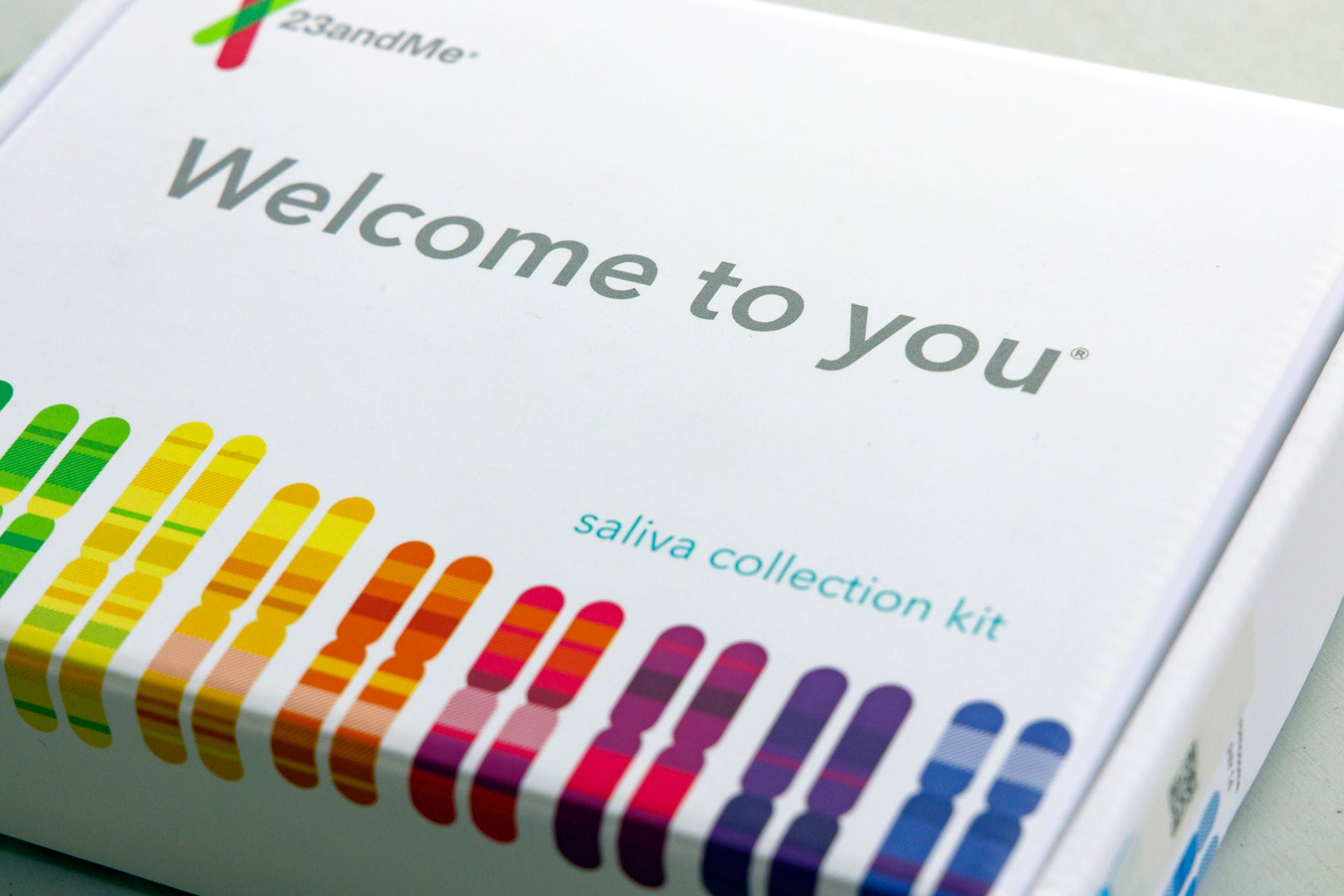
At the time, that felt like proof of concept. A consumer genetics company had convinced a million people to spit in a tube, mail it to a lab, and wait for a report on their ancestry and health risks. That was genuinely novel. The science was real. The product worked.
By 2018, they had 5 million customers. By the time they went public in 2021, they had 10 million. The pitch to investors was obvious: this is the largest crowdsourced genetic database in history, it’s proprietary, it takes years and hundreds of millions of dollars to replicate, and we’re just getting started on what we can do with it.
The stock hit $17.65. The company was worth $6 billion. Anne Wojcicki, founder and CEO, became a billionaire.
Four years later, all outstanding common stock was canceled and discharged in bankruptcy court. Shareholders got nothing.
Here’s what actually happened.
Before we begin... a big thank you to this week’s sponsor.

Invest in recession-resilient Mobile Home Parks with Vintage Capital
Invest in recession-resilient Mobile Home Parks with Vintage Capital. Invest direct or in a fund of 20+ underlying assets. 1031s are also available. Access stable, income-generating properties with consistent demand and low tenant turnover.
Now is the time to act: Current market conditions are creating opportunities to acquire properties at attractive valuations.
Our fund targets a 15%-17% IRR and makes monthly distributions, which provides a steady income stream alongside strong upside potential and tax-efficient benefits.
Why Mobile Home Parks?
Recession-Resilient: Affordable housing demand drives stable returns in any economy
High Tenant Retention: The average MHP tenant stays 10-12 years (compared to 2-3 in Multifamily)
Proven Expertise: $100MM+ track record in mobile home park investments.
Tax-Smart Investing: Bonus depreciation offers tax advantages.
Access The Vintage Capital Deal Room →
The backdrop
To understand why 23andMe failed, you have to understand what it was trying to be.
It launched in 2006 as a direct-to-consumer genetics company. The original product was simple: pay around $100, get a kit, send back your saliva, receive a report. Ancestry. Traits. Health risk flags. For a lot of people, it was fun. Oprah put the kit on her “Favorite Things” list. Celebrities talked about it. The category exploded.
The FDA slowed them down in 2013, sending a warning letter over health-related claims in the testing. The company took its health results products off the market and spent two years navigating regulatory affairs before winning FDA approval for consumer-focused genomic health tests. That was actually a meaningful moment. No one had done that before. First FDA-approved direct-to-consumer genetic health test. Real milestone.
But the business had a structural problem baked in from day one, and Wojcicki knew it. The kit was a one-time purchase. You do it once, you get your results, you move on. There’s no natural reason to come back. No consumable. No ongoing service that requires re-engagement. Just a report you check a few times and mostly forget about.
By 2019, kit sales had dropped 46% compared to 2018. One year, nearly half the revenue, gone. That’s not a bad quarter. That’s the market telling you the TAM has limits.
23andMe had two options at that point. Fix the consumer business. Or bet on the database.
They tried both, and succeeded at neither.
The subscription that didn’t convert
The obvious fix for a one-time purchase problem is a recurring model. 23andMe introduced a premium subscription product in 2020 that it hoped would make up for the lack of recurring revenue. The strategy failed to pan out.
In retrospect, this was almost inevitable. The product front-loaded all its value. You got your DNA results. You understood your ancestry. You saw your health risk flags. The report was comprehensive and, once read, mostly static. What exactly were you renewing for?
The company pursued other ventures, launching premium features such as matching a person’s DNA to historical figures and offering tests to calculate a person’s “biological age.” These are interesting parlor tricks. They’re not $20/month reasons to stay subscribed.
The subscription thesis required 23andMe to become a continuous health platform, not a one-time insight product. That’s a completely different company, with different product infrastructure, different clinical partnerships, different regulatory relationships. They never made that transition.
The pharma bet
So they went bigger.
If the consumer business had a ceiling, the real play was licensing the database to pharma companies for drug discovery. 15 million genotyped customers, health histories, longitudinal research opt-ins. That’s genuinely valuable to a pharmaceutical company trying to identify drug targets faster.
In 2018, 23andMe struck a deal with GlaxoSmithKline that included a $300M upfront investment, giving GSK exclusive rights to use 23andMe’s anonymized genetic database to identify novel drug targets.
That was a real deal. Real money. Real validation. GSK believed in the database enough to write a nine-figure check.
The problem: customers were “surprised and angry, unaware of what they had already signed and spat away.” The deal was legal. 23andMe’s privacy policy disclosed data could be used for research. But most customers had no idea that’s what they were consenting to when they checked the box. The trust erosion started here, years before the data breach.
GSK extended for a fifth year. Then the partnership ended. After the GSK deal ended, 23andMe didn’t find another pharmaceutical partner and its revenue took a hit.
That’s the whole pharma thesis in one sentence. They got one deal. When it ended, no one else stepped up at the same scale. The database that was supposed to power a platform of pharma relationships turned out to produce one anchor customer that eventually moved on.
The drug discovery gamble
Rather than doubling down on licensing, Wojcicki decided to go even further upstream: 23andMe would develop drugs itself.
Wojcicki later recounted how she was warned against doing drug research, which can cost hundreds of millions of dollars, require several years, and doesn’t guarantee success. She did it anyway.
R&D expenses consistently exceeded $150M annually from FY2022 to FY2024. The drug pipeline produced two candidates that reached early-stage clinical trials. Out of thousands of compounds. That’s actually not terrible by biotech standards. By 23andMe’s financial standards, it was a disaster. They were spending like a pharma company while generating revenue like a struggling consumer startup.
23andMe was “always very optimistic about the business and strategy,” said a former analyst, but “typically you don’t have investors who like hybrid companies.”
That’s the crux of it. Public markets want a story they can underwrite. A consumer brand is one story. A drug discovery company is a different story. 23andMe was asking investors to hold both simultaneously, while neither was working.
The data breach
Then came October 2023.
Hackers accessed the information of nearly 7 million customer accounts. Names, birth years, ancestry reports, health data.
For most companies, a breach is a bad news cycle and a settlement. For a company whose entire value proposition was “trust us with your most sensitive biological data,” it was a different category of problem. The thing customers had always been vaguely nervous about had actually happened.
By September 2023, 23andMe’s share price slid below $1. The company reported a $312M net loss in fiscal 2023.
Subscriptions weren’t growing. The pharma pipeline had stalled. The drug discovery was burning cash without returns. And now the trust angle was gone too.
The governance collapse
What followed was as messy as anything in recent startup history.
In September 2024, all seven independent directors resigned en masse, citing frustration with Wojcicki’s strategic direction and her efforts to take the company private. She remained the sole board member. A few months later, the company engineered a reverse stock split, consolidating every 20 shares into one, to avoid being delisted from Nasdaq.
When 23andMe reported earnings in November 2024, there were no Wall Street analysts on the call.
That detail says everything. Not the stock price. Not the layoffs. No analysts. The financial community had already moved on.
In February 2025, Wojcicki submitted a proposal to buy 23andMe that valued the company at $75 million—down from a $6B peak. The board rejected it. A month later, she filed for bankruptcy.

Vet bills won’t break the bank if you have the right insurance
Surprise vet bills can certainly bite. But fear not, pet insurance can be your lifeline. Some plans cover major surgeries—which can cost up to $7,000—so you can afford the best care for your pet. Check out our top-rated pet insurance providers, with some plans offering coverage for just $1 a day, multi-pet coverage, and reimbursement options of up to 90%. With the right coverage, you could keep your pet (and your wallet) happy.1
The strange ending
In an unexpected turn, the winning bidder for 23andMe’s data was a nonprofit created and controlled by 23andMe’s own founder. TTAM Research Institute acquired the genetic database for $305M.
The same person who ran the company into the ground bought it back, at a fraction of the peak valuation, through a newly formed nonprofit entity. The bankruptcy court approved it over a competing bid from Regeneron.
All 27.5 million shares of existing common stock were canceled and discharged. Public shareholders got essentially nothing. Wojcicki kept the database.
What actually went wrong
The easy answer is “no recurring revenue.” That’s true but incomplete.
The deeper answer is that 23andMe was always two or three businesses at once, none of which fully worked, and the company spent a decade burning cash trying to make all of them work simultaneously.
The consumer business had a natural ceiling. The subscription product never found a compelling enough reason to renew. The pharma licensing produced one major deal that ended. The drug discovery was expensive and slow and required a different company than the one they had. And the data breach destroyed the trust that was the foundation of everything.
23andMe was still operating like a startup long after the runway ran out.
They had 15 million customers. They had a database nobody could replicate. They had real scientific credibility and an FDA-approved product. None of it translated into a durable business because the unit economics never worked, the retention was structurally broken, and every attempt to fix it added cost without adding revenue.
The DNA was real. The business model never was.
If you like what you read please do “add to address book” or reply (it helps with deliverability). If you don’t you can unsubscribe below.
See you tomorrow (Monday)—Tom
Ad